Local gas guide
What gas work in Liverpool actually involves
If you can smell gas, do this first
Open the house up, get everybody outside, and touch nothing electrical on the way past. Ring from outdoors.
Turn the gas off at the meter if you can reach it safely. If it sits behind the smell, leave it and get out.
A licensed gas fitter answers when you ring us, and where the network's emergency crew is the right first call we will say so.
The run was sized for the original appliances
Gas pipework is not one-size-fits-all. A gas fitter works out the pipe size from the appliances it has to feed and the distance it has to carry them.
In an estate home the builder did that calculation for what was installed at handover, correctly, and the pipe has not changed since.
So anything added later is being asked to fit inside a calculation it was not part of.
Adding appliances is adding load
A cooktop, a heater on a bayonet, an instantaneous hot water unit and an outdoor kitchen all draw from the same line and the same meter.
Each one on its own may be fine. Together they may exceed what the original run can deliver, and the symptom is appliances starving each other rather than anything failing.
A burner that drops off whenever the hot water fires is nearly always this rather than a faulty appliance.
Capped points are common and should not be uncapped casually
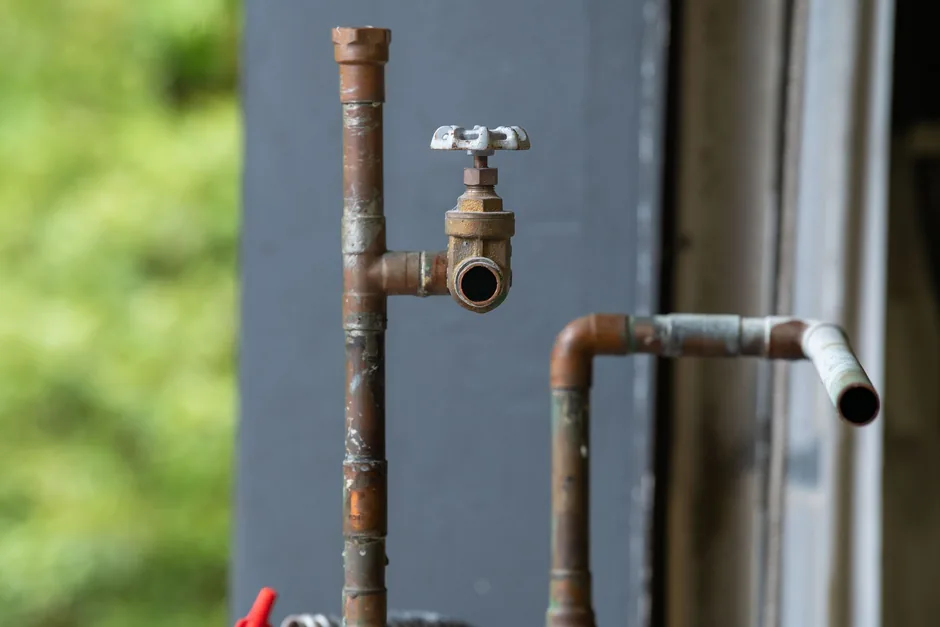
Estate builders frequently rough in points that were never commissioned, for a future barbecue or an outdoor kitchen, and cap them off.
Connecting one is licensed work with its own certificate, and it involves testing a line that has been sitting unused.
It is not a matter of taking the cap off, and doing it informally leaves you with an uncertified connection on a house that is otherwise fully documented.
One certificate covers one lot of work
The compliance certificate the builder handed over covers the builder's installation. It says nothing about anything added afterwards.
So every subsequent piece of gas work needs its own certificate, and those accumulate as a record of the property rather than replacing each other.
Keep them together with the handover documents rather than in a folder of receipts.
Installation work carries statutory warranty too
Gas installation on a new home is residential building work, so it falls under the same statutory warranty scheme as the rest of the build.
That means a defect in the original installation is worth raising rather than simply paying to fix, particularly inside the warranty period.
We are plumbers rather than lawyers and we will not advise you on your rights. We will document what we find.
Everything shares one supply
Adding an appliance is a calculation against total demand rather than a connection. The line has a capacity and so does the meter.
The input rating on the appliance plate is the number the calculation runs on, and a photograph of it is enough to start.
Doing the sums first is most of the difference between an installation that works and a callback that gets blamed on the equipment.
Cooktops and the clearance nobody checks
A gas cooktop has required clearances to the cabinetry around it and to anything combustible above it, taken from the manufacturer's instructions.
A rangehood at the wrong height, or an overhead cupboard fitted after the cooktop, is the common way a compliant installation stops being one.
It is worth a look if the kitchen has been changed since handover.
We test what we connect to
Certifying a new appliance on a line losing pressure elsewhere achieves nothing, so the existing installation gets tested as part of connecting anything new.
On a newer home that occasionally finds something in the original work, which is exactly the sort of thing worth documenting rather than quietly fixing.
When it does, we tell you before doing the work rather than after.
What a compliant installation actually involves
Pipe sized for the run and the load, tested to pressure, appliances installed to the manufacturer's instructions with the required clearances, flueing that discharges where it should, and ventilation suited to the appliance and the room.
None of it is visible once the house is finished, which is exactly why the certificate matters.
On a new home it is also the only independent statement that the rough-in behind your walls was done properly.