Plumbers In LiverpoolLicensed · Local · 24/7 1300 381 569
Hot water

Hot water repaired
and replaced across Liverpool

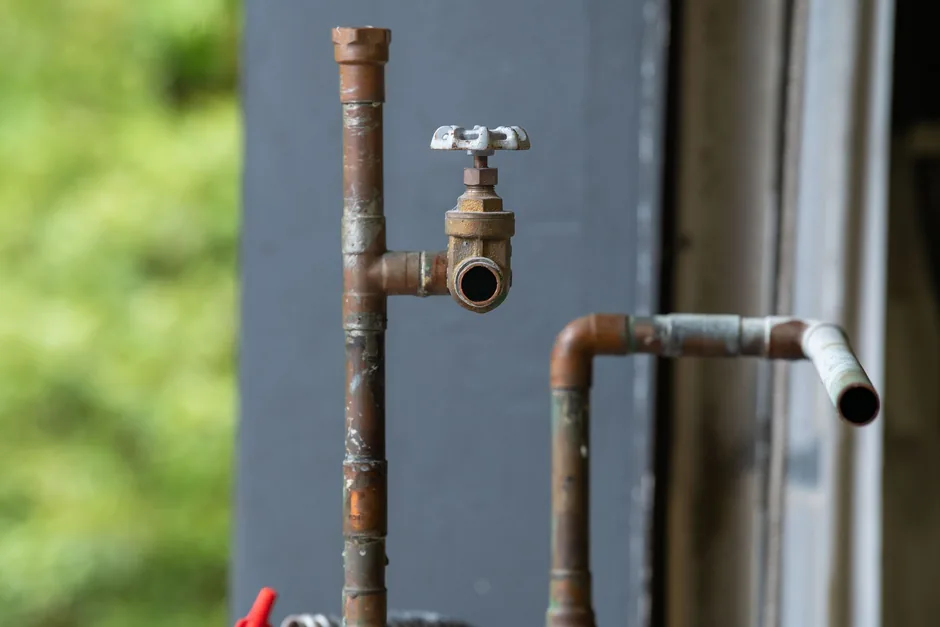
We check the valves before we quote anything. A failed pressure limiting valve is the most common reason a tank dies years early, and it is also the most common reason a warranty claim gets declined.

Same-day repairsNSW Lic. 368473CGas, electric & heat pump
Call 1300 381 569

Get a hot water callback

Online Now!·--:--

No obligation · Licensed & insured · Fixed price upfront

Why hot water systems fail early in Liverpool

Most hot water units that die young did not die of old age. They died of pressure, and the part that was supposed to prevent that costs very little.

A storage water heater is built for a particular working pressure and relies on a limiting valve on the incoming supply to keep the mains down to it. When that valve fails, and it is a consumable part that does fail, the tank spends every day of the rest of its life at a pressure it was not designed for. The relief valve starts weeping to cope, the cylinder is stressed continuously, and a unit rated for a decade gives you six or seven years.

It matters twice over in the newer estates. Those systems were installed by whoever the builder engaged, all at once, at volume. Most manufacturer warranties are explicitly conditional on correct installation and on the required valves being fitted and functioning, so a valve problem is not only what breaks the tank, it is also what gets the claim declined. Meanwhile the installation itself sits under the statutory warranty that applies to residential building work.

In the older estates the picture is different but the diagnosis discipline is the same: large electric storage tanks on a controlled load tariff, quietly doing their job for decades, reaching the end of it now. The question there is not usually whether to repair, it is what to put in its place.

Licensed plumbers at the workshop
  • Valves checked firstBefore anything gets quoted
  • Same-day repairsMost faults sorted on the first visit
  • Gas, electric, heat pumpRecommended on what you actually have
  • Licensed plumberNSW Licence 368473C, fully insured
Service van on its way to a Liverpool job

No hot water this morning?

Tell us gas, electric or heat pump and roughly how old it is. Those two answers decide whether this is a part on the van or a conversation about replacing it.

Local hot water guide

What actually goes wrong with hot water in Liverpool

The valve that quietly kills tanks

A pressure limiting valve sits on the cold supply and holds the mains pressure down to what the water heater is rated for. It is a small, inexpensive, wearing part and it is meant to be replaced periodically. Almost nobody does.

When it fails open, the tank runs at full mains pressure permanently. The first symptom is usually the relief valve dripping continuously, which people put up with or plumb into a drain and forget. That drip is the tank telling you it is being over-pressured, and ignoring it is what turns a twelve-year unit into a seven-year one.

Manufacturer warranty and builder warranty are not the same thing

The manufacturer warrants the unit, and on most brands that warranty is conditional: installed by a licensed person, to the standard, with the required valves fitted. If the tempering or limiting valve is missing or failed, a claim can be declined on those grounds regardless of what actually broke.

The installation work is separate and sits under the statutory warranties for residential building work: six years for a major defect, two years otherwise, from completion, and they pass to subsequent owners. So on a newer home the useful question is not only what failed, but who installed it and when the house was finished.

Sediment is why it runs out faster than it used to

Minerals settle out of the water and collect in the bottom of the cylinder. That layer takes up volume you paid for and insulates the element from the water it is meant to be heating, so the unit works harder and delivers less.

On a younger tank a drain and flush is worth doing and buys real time. On a tank past the decade mark it is usually money spent slowing something down rather than fixing it, and we will say so.

Rusty hot water is the cylinder, not the water

Every storage tank has a sacrificial anode inside it that corrodes deliberately so the steel does not. When the anode is spent, the cylinder starts to go instead.

Discoloured hot water while the cold runs clear is that process becoming visible. Replacing the anode in time genuinely extends the life of a tank and is worth doing at the halfway mark. Once the rust is showing at the tap, you are usually past that point.

Replacing an old off-peak tank is a real decision

Plenty of the housing here still runs a large electric storage tank on a controlled load tariff, an arrangement that made complete sense when it was installed.

Replacing it like for like is the path of least resistance and is sometimes right. But if mains gas is connected, continuous flow is generally cheaper to run and frees up a cupboard. If there is no gas, a heat pump is usually the better electric option and there are rebates worth asking about, provided there is a sensible outdoor spot with airflow for it. What you should get is the comparison, not a default.

Choosing a replacement, when half the city already has one fitted

In the older estates the decision is usually open, because what is there is a large electric storage tank on a controlled load tariff and the house may or may not have gas connected. In the newer estates the builder already made the choice for you, so the question is whether to repeat it.

Either way it turns on running cost rather than purchase price, and on what is physically connected to the house. Lot sizes in the growth area estates are small, which does genuinely narrow where a heat pump can sit.

Indicative service life. What you actually get depends on how hard the system is worked, and on whether the pressure limiting valve was ever replaced.
SystemHow it heatsTypical lifeSuits
Electric storageAn element heats a tank, often overnight on a controlled load tariff8 to 12 yearsHouses with no gas connected, where a like-for-like swap is the priority
Gas storageA burner under the tank, reheating through the day8 to 12 yearsEstablished homes with mains gas already at the meter
Continuous flowHeats on demand, so there is no tank to run out15 to 20 yearsMost estate homes. Check the gas run carries the total load
Heat pumpMoves heat from the surrounding air, like a fridge in reverse10 to 15 yearsAll-electric homes with an outdoor spot that has airflow
Solar with boostRoof collectors with electric or gas backup15 to 20 yearsOpen north-facing roof, which newer estate roofs often have

Sizing, roughly

A starting point rather than a rule. A household showering back to back within an hour needs more than the same number of people spread across a morning.

Continuous flow is rated in litres per minute rather than capacity, so it is sized on peak demand rather than on household size.
People in the homeElectric storageGas storageContinuous flow
1 to 2125 L135 L16 to 20 L/min
3 to 4160 to 250 L135 to 170 L20 to 26 L/min
5 or more250 to 315 L170 L or more26 to 32 L/min

What hot water work costs in Liverpool

Fixed price agreed before anything starts. Indicative 2026 Sydney ranges for guidance, not quotes. On a tank past about twelve years we will tell you plainly when a repair is not worth your money.

01

Service call and diagnosis $120 – $250

The fault identified and the valves checked, with the repair figure given before we start.

02

Common repairs $200 – $600

Elements, thermostats, relief valves and pressure limiting valves.

03

Electric storage replaced $1,200 – $2,200

Supplied, installed and the old unit taken away. Priced on capacity.

04

Continuous flow gas installed $1,600 – $2,900

Including the gas work and the compliance certificate.

05

Heat pump installed $3,000 – $5,000

Before any rebate you qualify for. We will tell you what is currently available.

The hot water brands across Liverpool

Almost every home here runs one of these eight, and which one you have often says more about when the house was built than about anyone's preference. Rheem, Vulcan and AquaMAX storage tanks are what we mostly find in the older estates, plenty of them on a second or third replacement by now.

Rinnai and Bosch continuous flow dominate the newer releases, because that is what volume builders fit. Dux turns up across both storage and heat pump, Solahart on the open roofs the estate homes tend to have, and Stiebel Eltron on heat pump conversions where there is no gas connected at all.

Elements, thermostats, anodes, tempering valves and pressure limiting valves for the mainstream brands ride on the van, so a repair is usually same day. On a newer unit we will check the valves and the paperwork together, because a manufacturer warranty frequently turns on whether those valves were fitted correctly in the first place.

We service and replace these systems as an independent licensed plumber. We are not an agent for, or endorsed by, any manufacturer.

How a hot water call-out runs.

Step 01
Taking a hot water call from a Liverpool home

What have you got, and how old?

Gas, electric or heat pump, and roughly the age. It decides whether the part is already on the van.

Step 02
Checking the relief valve on a Liverpool hot water system

Valves checked before anything else

Limiting valve, relief valve, tempering valve. If one of those is the cause, replacing the expensive part fixes nothing.

Step 03
Repairing a hot water system at a Liverpool property

Repaired, or the numbers put side by side

Most faults are done on the first visit. Where replacement is the better value we show you both figures rather than steering you.

Step 04
Completing a hot water installation in Liverpool

Tested, certified and cleaned up

Temperature checked at the outlets, compliance certificate issued on gas work, old unit taken away.

Cold shower this morning?

Call and tell us gas, electric or heat pump. Most hot water faults are repairable the same day, and we will tell you honestly when they are not.

Call 1300 381 569
Licensed Liverpool plumber ready to take your call

Hot water questions.

What Liverpool locals ask us before booking a plumber.

Ask us yours Licensed plumbing van covering Liverpool and the surrounding suburbs
No hot water at all. What should I check first?

It depends what you have. On an electric storage tank, check whether the circuit has tripped at the switchboard, and be aware that many older Liverpool homes run the tank on a controlled load tariff, which only heats overnight. If that circuit dropped out yesterday you will not know until the stored water runs out. On gas continuous flow, check that the gas is on and that the isolation valve at the unit has not been knocked closed. On a heat pump, check the unit is running at all. Beyond that it is a licensed job, because the pressure and temperature relief valve is not something to experiment with.

Why do people keep telling me to check the valves?

Because they are the most common reason a tank dies young and the most common reason a warranty claim gets knocked back. A storage water heater has a pressure and temperature relief valve, and the incoming supply should have a pressure limiting valve holding the mains down to what the tank is rated for. If that limiting valve has failed, the tank spends its life at a pressure it was never designed for, the relief valve dribbles constantly, and the cylinder fails years early. It is a small part, it is cheap, and nobody ever looks at it.

The builder installed my hot water. Am I covered if it fails?

Two separate things are running and it is worth knowing which is which. The manufacturer's warranty covers the unit, and on most brands it is conditional: installed by a licensed person, to the standard, with the required valves fitted, and frequently void if the tempering valve or pressure limiting valve is missing or has failed. Separately, the installation work itself carries statutory warranty under the Home Building Act, six years for a major defect and two years otherwise from completion, and that passes to later owners. So a failure caused by a missing valve is often a builder question rather than a manufacturer one. Keep the paperwork, and if you do not have it, ask.

My water runs rusty or the hot never lasts.

Rusty hot water usually means the sacrificial anode inside the tank is spent and the cylinder itself has started to go, which is the beginning of the end rather than a fault to repair. Hot water that runs out faster than it used to is normally sediment: minerals settle in the bottom of the tank, take up volume and insulate the element from the water, so you pay to heat a layer of sludge. On a tank under about eight years old both are worth addressing. Past twelve, replacement is usually the honest advice.

What should I replace an old off-peak electric tank with?

It depends on what is actually connected to the house, which is why we ask before recommending. A great many older Liverpool homes have a large electric storage tank on a controlled load tariff, sized for that arrangement. If mains gas is connected, continuous flow gas is generally the cheapest to run and takes up far less space. If there is no gas, a heat pump is usually the sensible electric replacement and there are rebates available, though it needs somewhere with airflow to sit and it is not silent. Like-for-like electric storage is occasionally still the right answer, but it should be a decision rather than a default.

How long should a hot water system last?

A storage tank is generally eight to twelve years, and it lasts closer to twelve when the pressure limiting valve has been doing its job and the anode has been replaced somewhere along the way. Continuous flow gas frequently runs fifteen to twenty. Heat pumps are newer in volume so there is less long-run data, and manufacturer warranties are the practical guide. Anything failing well short of those numbers usually has a reason, and the reason is usually a valve.

What does hot water work cost in Liverpool?

A service call and diagnosis is $120 to $250. Common repairs, elements, thermostats, relief and limiting valves, generally land between $200 and $600. A replacement electric storage tank supplied and installed is around $1,200 to $2,200 depending on size, continuous flow gas $1,600 to $2,900, and a heat pump $3,000 to $5,000 before any rebate. We quote the figure before we start and we will tell you when repairing an old tank is throwing money at it.

Licensed Liverpool plumber arriving with his tools

Get the hot water sorted in Liverpool

Tell us what type it is, roughly how old, and whether the relief valve has been dripping. That last one is the detail most people leave out and it explains a lot of early failures.

Fixed price agreed before we start, and a straight answer on repair against replacement.

1300 381 56924/7 emergency line
[email protected]Non-urgent enquiries
Servicing Liverpool & districtNSW Licence 368473C

Get a hot water callback

Online Now!·--:--

No obligation · Licensed & insured · Fixed price upfront

Call now